
By Marina Rakhilin, CCC
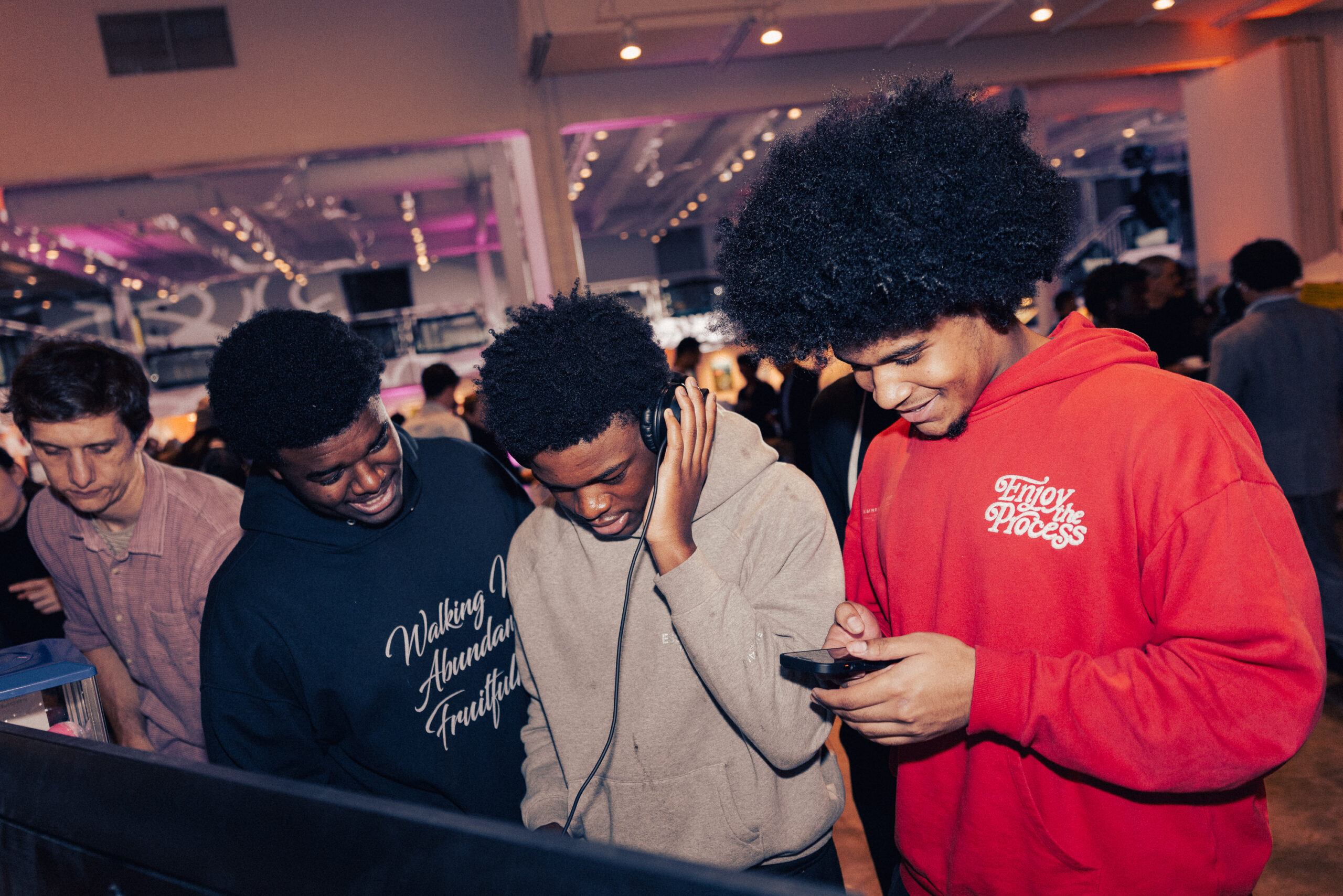
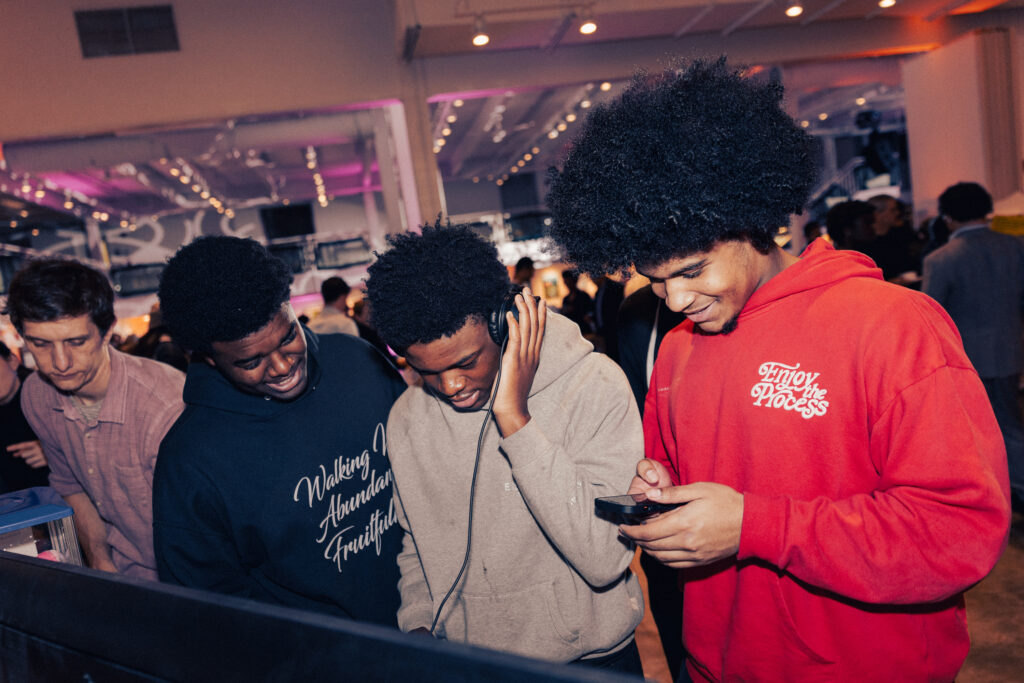
On the evening of November 10, 2025, more than 150 Bostonians came together with members from the MIT Center for Constructive Communication (CCC) for the realtalk@Boston release party — a celebration of the realtalk@Boston project: two years of neighborhood conversations where hundreds of residents shared their hopes, frustrations, and dreams for the future as a first step toward a more connected Boston.
“It was energizing to be in a space where there was clearly a lot of intentionality and thoughtfulness in exploring how technology can support genuine connection and community-building,” commented Aesclinn Donahue, Director of UX and Service Design for the City of Boston. “There’s both a lot of fear and a lot of hype around AI right now, and it was interesting seeing these creative approaches to civic engagement and dialogue, without putting blinders on about the potential harms of these types of technologies.”

Lights speckle the walls of Artists for Humanity as a full crowd sits in rapt attention, enjoying the panel and musical performances on stage. (Photo credit: Taylor Coester)
Hosted at Boston’s Artists for Humanities (BAH), the evening invited people not just to learn about the project, but to experience it — through art, storytelling, performance, and installations that brought a vivid, collective portrait of Boston to life.
Opening the event, Dimitra Dimitrakopoulou, CCC’s head of translational research & practice, reflected on what realtalk@Boston was built to practice: “A Listening City treats listening as civic infrastructure—making room for everyday stories across neighborhoods and communities, and turning those stories into shared understanding and deeper relational trust. That’s because stories help us connect, understand lives different from our own, and imagine a better future—together.” That emphasis on story as connective tissue set the stage for the evening’s panel on why community conversations matter.
A stage for the power of story
From there, the evening opened into a panel on why community conversations matter. A participant in the evening’s panel discussion, Reverend Chris Hope, Director of the Loop Lab, reflected that this gathering reminded him why he “fell in love with this work in the first place: the power of story to connect people across lines of difference.” Other panelists representing Boston organizations included Erika Howard (Director of Impact Strategy and External Relations at FRONTLINE, PBS), George (Chip) Greenidge Jr. (founder and director of the Greatest MINDS), Sulagna (Dia) Ghosh (founder of Joint Family), and Ravjot Mehek Singh (City of Boston Digital Media Producer).
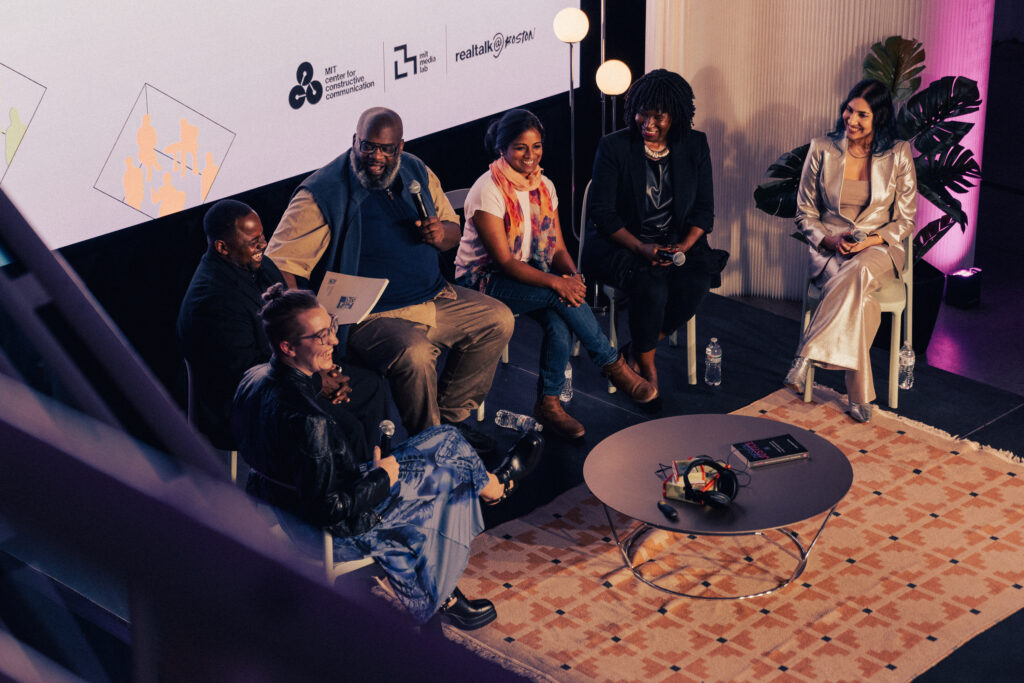
Erika Howard shared her perspective on the value of this research and community engagement, explaining, “Facts inform, but stories connect people on an emotional level — and that’s how you communicate across difference.”
The evening’s activities also included several performances inspired directly by the hundreds of conversations held over the past two years. Tyler Donkoh-Halm performed a custom ukulele piece inspired by a realtalk@Boston conversation. J. Andrés Ballesteros followed up this performance with the premiere of his new piece, A Decent Place to Live, which brought together stories about housing from the conversation project overlaid with the voices of a quartet of opera singers.
This event marked the culmination of CCC’s close collaboration with 11 local non-profit organizations.* “From the very beginning, we knew that realtalk@Boston could only work if we engaged directly with the community—in the community—creating feelings of trust, familiarity, and respect,” said Marina Rakhilin, CCC realtalk program lead. “It was important that all the participants could be confident that we were using the recordings and data from the conversations to tell Boston’s stories in a way that they could heard by those who could best effect change.
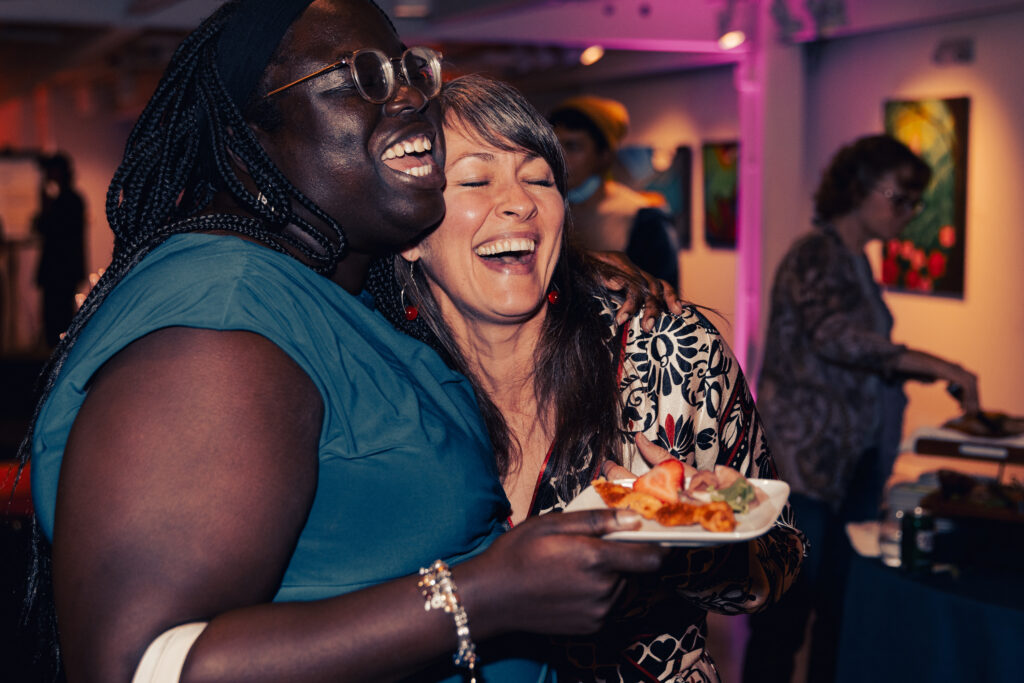
CCC research designer Cassandra Lee emphasized the importance of spending time listening to the small, everyday stories of one’s neighbors at a time when we are mass consuming opinions of random people on the internet. “As a technology designer, I can’t think of a better way to validate the incredible efforts of community organizations than to make art with their labors, and take seriously the message that the conversations between everyday people matter.”
“These aren’t the stories that usually make headlines, but they speak volumes to what it means to live, struggle, and dream in Boston,” added Dimitrakopoulou. “In so many ways, they are the heartbeat of the city.
To experience the project beyond the event, visit the realtalk@Boston website, and discover the themes that emerged across conversations citywide. Choose a theme, listen to a story, and share it with someone you care about. We hope it inspires you to listen a little more deeply—and start a conversation of your own.
Acknowledgements
The MIT Center for Constructive Communication offers a special thanks to the Robert Wood Johnson Foundation, which funded this initiative, and to the community organizations that collaborated to make the realtalk@Boston project–and this event–possible. They are: ArtSpark Boston, Boston Independent Nonprofit Journalism (BINJ), Boston CASA, Circus Up, Disability Law Center, Family Nurturing Center of MA, Greatest MINDS Boston, Joint Family, Primary Source, The Chica Project, and The Loop Lab.
