
Overview
Many of the social forms we rely on were inherited rather than designed, built to convey information rather than build trust. They are creaking under the weight of seismic changes in our social and technological lives. We feel the consequences in rising loneliness, polarization, and disconnection.
People have redesigned their gathering structures before, at moments that demanded it. The ancient Athenians built the agora so that merchants, philosophers, and magistrates would regularly encounter one another. Alcoholics Anonymous, before it became a movement, was an experiment in radical honesty among strangers meeting weekly in the same room. Civic assemblies bring together randomly selected citizens to deliberate, make decisions, and help shape public policy.
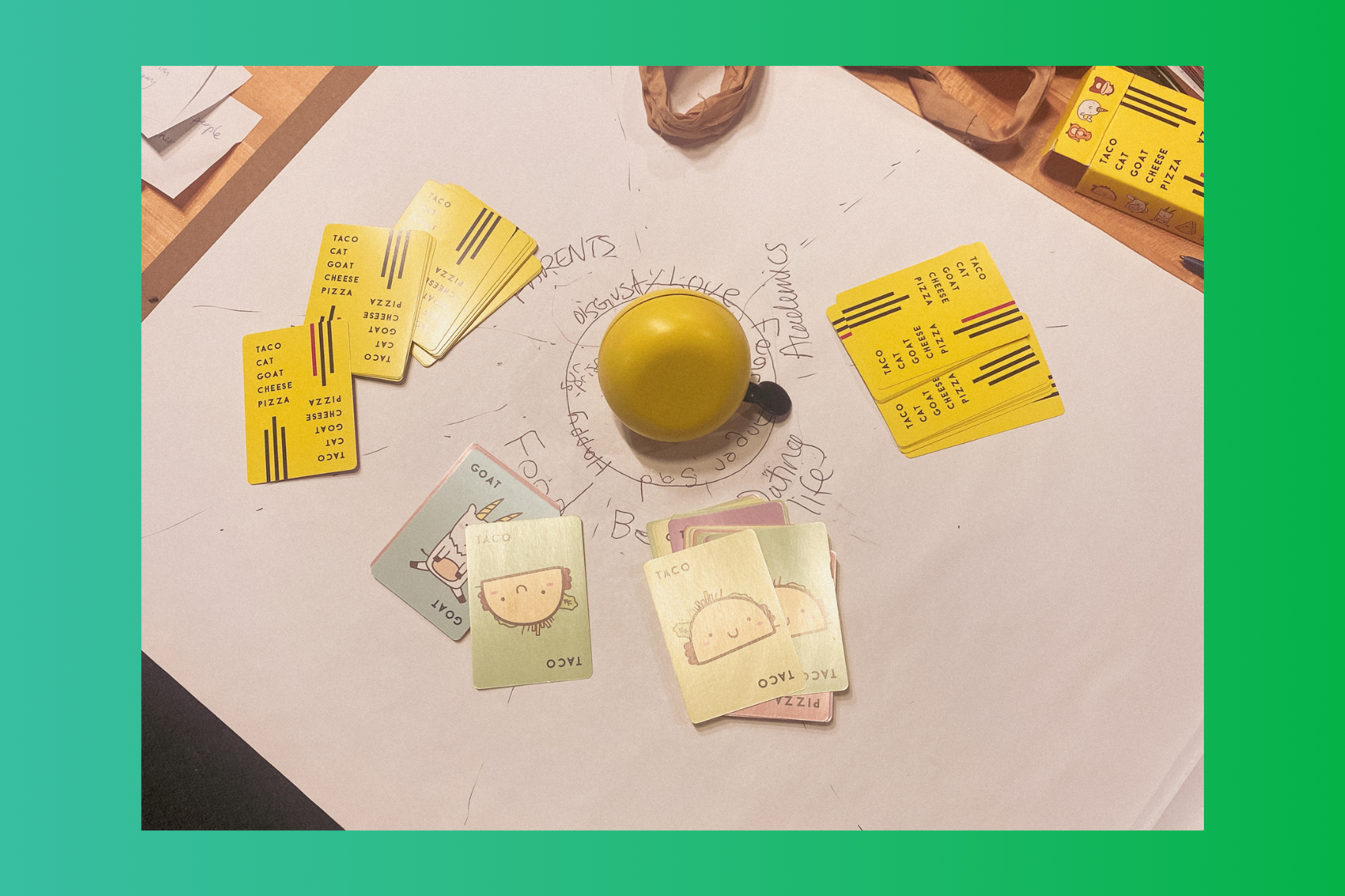
Today, new experiments are proliferating. Across fields—from civic life and community organizing to games, therapy, and workplace design—practitioners are quietly reinventing how people come together, developing new rituals, formats, and structures that enable genuine connection, accountability, and shared understanding. But this knowledge rarely travels. It remains fragmented across disciplines that seldom intersect.
New Social Forms is designed to connect these efforts and help that knowledge travel across domains.
The initiative’s first year focuses on teams, where the pressures of technological change are most immediate and most legible. Many of the formats teams rely on—meetings, decision processes, workshops—were built to move information, not to support the complexity of human collaboration under today’s conditions. We are asking what it would look like to change that deliberately, and whether technology can meaningfully amplify the result.
Over time, New Social Forms will expand into other domains: civic participation, care and healing, learning, conflict and repair. But year one grounds the work where the case for deliberate design is both urgent and tractable.
How the Work Happens
The initiative operates across four workstreams.
Convenings: We convene practitioners, researchers, and builders through salons, workshops, and field visits to exchange insights and identify directions. Each gathering brings together 15–20 people working on similar structural problems from different contexts: a facilitator structuring dialogue, an organizational leader shaping team rituals, a therapist designing group processes, a technologist building tools for coordination. The same underlying questions, answered differently, in domains that rarely intersect.
Knowledge Hub: We are building a living database of conversations and interviews with practitioners across domains.
Field Pilots & Prototypes: We are designing and launching field pilots with external collaborators as real-world experiments in the workplace and introducing prototypes to explore new social forms in the context of teams, studying what happens, and generating real-world evidence about what works.
Research: We are developing a research agenda that includes a taxonomy of social forms, computational modeling of group dynamics, and evaluation frameworks for measuring outcomes.
Get Involved
There are three ways in.
If you are designing how groups come together—across civic life, organizations, communities, or enterprises—we’d like to hear from you. We’re building a map of who is doing this work and want you at our gatherings and in the Knowledge Hub.
If you are a researcher interested in the social dynamics of groups, coordination, or collective intelligence, let’s explore how we might collaborate.
And if you are part of an organization experimenting with the future of teams—particularly how AI may affect cohesion, creativity, and decision-making—let’s explore prototyping together.
Visit newsocialforms.org or email newsocialforms@media.mit.edu.
The way we gather is infrastructure. It shapes what becomes possible.